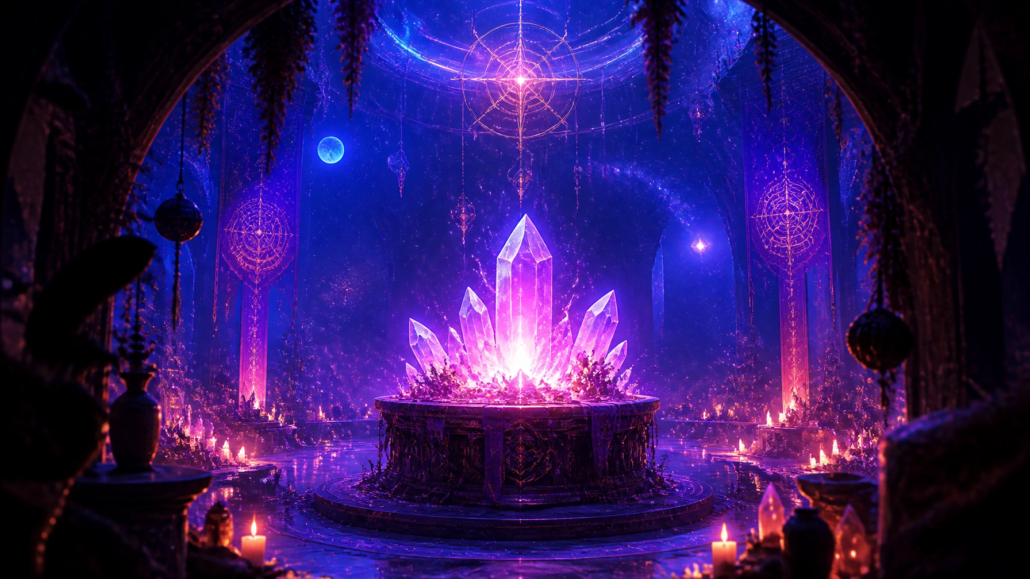
Are Crystals Dead in 2026? Why Serious Practitioners Are Ditching Decorative Stones for Real Ritual Tools
As we navigate the mid-point of the decade, a discernible shift has occurred within the metaphysical community. The ubiquity of "shelfie-ready" crystals, once scattered across domestic spaces primarily for their aesthetic allure, is facing a seminal challenge. In 2026, the paradigm of the "passive observer" is being replaced by that of the "intentional practitioner." The question circulating through spiritual circles is no longer "How do these stones look?" but rather, "Are crystals dead as mere ornaments?"
For serious practitioners, the answer is a resounding affirmative. The trend toward mass-marketed "decorative stones" is waning, making way for a return to authentic ritual tools and purposeful practice. This evolution signifies a transition from a superficial spiritual hobby to a grounded, empirical framework of personal transformation.
The Etymological and Historical Foundations of Sacred Tools
To understand this shift, one must examine the linguistic and historical roots of the objects in question. The term "crystal" derives from the Greek krystallos, meaning "ice," a name rooted in the ancient belief that quartz was water frozen so deeply it could never thaw. Historically, these were not merely beautiful curiosities; they were "seminal" tools of the physician and the priest, utilized for their perceived ability to focus light and energy.
Similarly, a "ritual" is more than a repetitive action. Derived from the Latin ritus, it refers to a "proven way" of interacting with the sacred. Throughout history: within the traditions of Witchcraft, Wicca, Shamanism, and beyond: the tools of the trade were chosen with rigorous scrutiny. A practitioner's athame, wand, or ritual journal was never merely an accessory; it was an extension of the practitioner’s will, a physical anchor for metaphysical intent.
The Crisis of Aestheticization: Do Universals Exist in a "Pinterest-Perfect" Practice?
What is the cost of the aestheticization of spirituality? In the early 2020s, the "crystal boom" led to a saturation of the market with stones stripped of their context. When a sacred object is treated as a "pop of color" for a living room, it risks losing its status as a cornerstone of spiritual inquiry.
Serious practitioners are now asking:
- Does the mass-marketization of crystals dilute their traditional efficacy?
- Can a "decorative" stone truly serve as a psychological totem if its primary function is visual harmony?
- Is the pursuit of "aesthetic vibes" hindering the deep, often difficult work of spiritual shadow work and manifestation?
The 2026 movement away from decorative stones is not an abandonment of crystals themselves, but a rejection of their trivialization. Practitioners are reclaiming these tools as functional art: objects that must "transcend" their physical beauty to serve a specific emotional or ritualistic purpose.

The 2026 Paradigm: Intentionality Over Quantity
Contemporary spiritual practitioners are adopting a "less is more" philosophy. In an era marked by digital overload and economic uncertainty, the focus has shifted toward building a curated spiritual shop of tools that offer tangible support. This shift is characterized by three key developments:
- Emotional Ecosystems: Rather than cluttering every surface, individuals are creating focused "emotional ecosystems." A single, high-quality piece of Black Tourmaline or Obsidian is placed at a workstation specifically to guard against "digital drain" and workplace stressors.
- Psychological Totems: Crystals are being reframed as psychological anchors. A piece of Carnelian is not just a orange stone; in 2026, it is used as a functional tool for "energetic productivity" and sacral chakra activation, helping the practitioner bridge the gap between abstract goals and empirical action.
- The Altar as a Workspace: The altar has evolved from a static display to a dynamic workspace. Tools such as cast-iron cauldrons, traditional besoms, and ceremonial candles are being reintegrated into daily life.

Selecting "Real" Ritual Tools: A Framework for the Modern Practitioner
How does one distinguish between a decorative trinket and a legitimate ritual tool? The distinction lies in the origin, the craftsmanship, and the alignment with one’s specific path. Whether you are following the paths of Santeria, Druidism, or traditional Wicca, the tools must resonate with the weight of tradition.
Consider the following categories of essential pagan supplies and their contemporary applications:
- Divination Tools: Beyond the aesthetic, tarot and oracle decks serve as sophisticated psychological frameworks for self-reflection.
- Symbolic Figurines: Items like the Triple Goddess statues act as visual reminders of life's cycles: Maiden, Mother, and Crone: rather than mere mantelpiece ornaments.
- Sacred Stationery: The use of handcrafted leather journals for recording spells, dreams, and ritual outcomes is a hallmark of the serious practitioner who seeks to document their "intellectual journey."
The Ongoing Intellectual Journey: Linking Tradition to Modern Science
The shift we see in 2026 is a vital field of inquiry for those interested in the intersection of psychology and metaphysics. While skeptics may dismiss these tools as relics of the past, modern science is beginning to acknowledge the power of "symbolic objects" in regulating emotion and focusing cognitive attention. When a practitioner uses a specific crystal to anchor a state of calm, they are utilizing a sophisticated psychological tool for neuro-regulation.
As the "decorative" era of crystals fades into the background, a more mature, contemplative, and potent form of spirituality emerges. Moon Mystics remains committed to this evolution, providing over 7,000 wicca supplies and ritual essentials that support those who seek depth over surface-level beauty.

Summary: The Future of Practice
Are crystals dead? Only the ones that sit forgotten on a shelf. The future of the spiritual path lies in the hands of those who pick up their tools with intention. By ditching the decorative and embracing the ritual, practitioners in 2026 are reclaiming their agency and illuminating their paths with high-quality, ethically sourced, and purpose-driven tools.
Whether you are seeking protection, manifestation, or simple mindfulness, the transition from "décor" to "ritual" is a cornerstone of an authentic spiritual life. It is an invitation to move beyond the visual and into the visceral experience of the sacred.